
September 1, 2026
Bonus Content: Refiners Are Posting Big Profits While You Pay $4 at the Pump
Dear Reader,
The market is about to fall.
Click here to hear what Larry is saying now.
Two years later, Larry told a reporter that another massive collapse was coming.
Again, few believed him.
The S&P fell 20%. The Nasdaq lost a third of its value.
But Larry went 11 for 11 that year, including recommending one trade that returned 117% in under a month.
Now Larry Benedict is speaking out again.
He says a historic shift is coming to the Federal Reserve, and what follows will likely create the biggest divide between market winners and losers in nearly 20 years.
He’s urging everyone he knows to get positioned in one specific ticker before it arrives.
Click here to hear exactly what Larry is warning about right now.
Best wishes,
Lauren Wingfield
Managing Editor, The Opportunistic Trader
P.S. The last time the Fed made a shift this significant – 2022 – Larry’s readers had the chance to double their money in under a month.
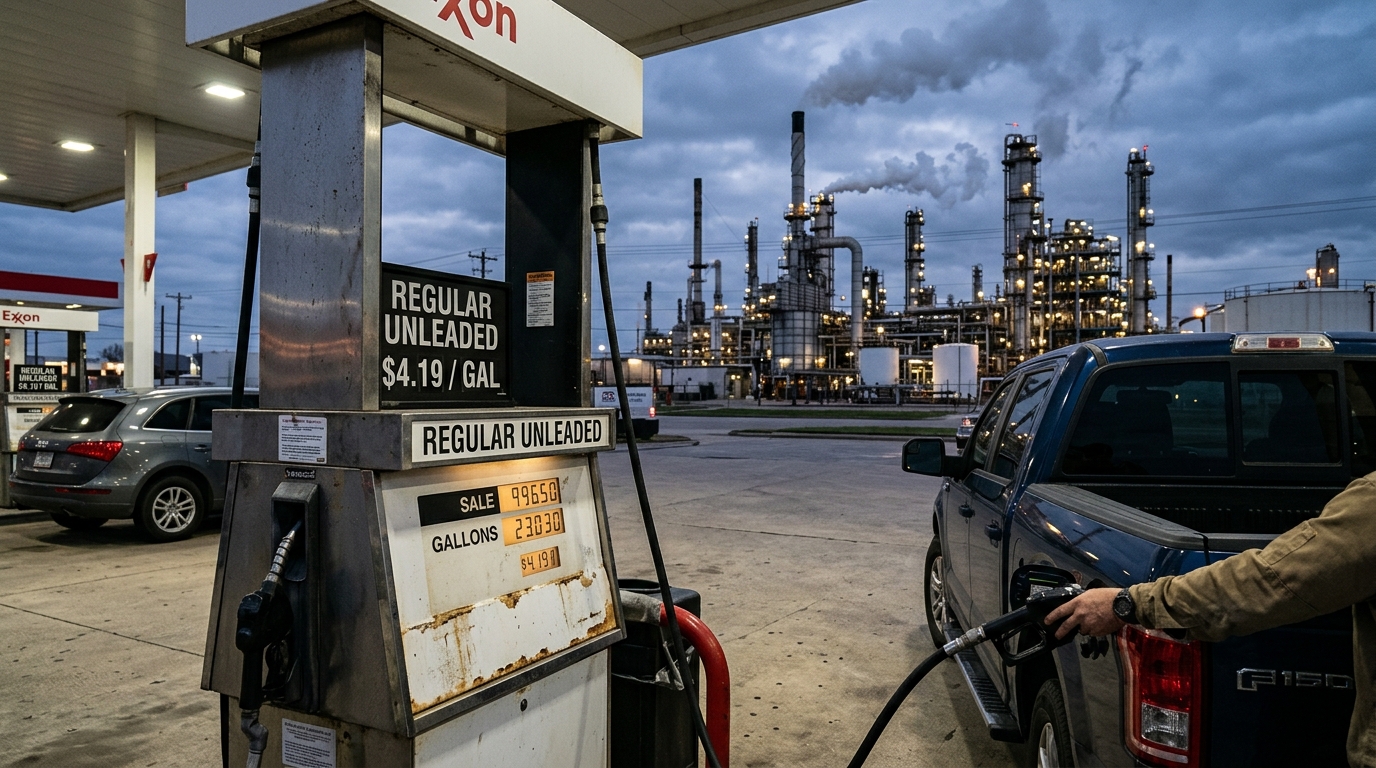
Refiners Are Posting Big Profits While You Pay $4 at the Pump
Tuesday’s closed-door White House meeting between President Trump and the chiefs of Marathon Petroleum, Valero, PBF Energy, Chevron, and Delek US Holdings carried a simple political message: lower prices or face consequences. The market reality is far less cooperative.
The Numbers Behind the Pressure
Gasoline is averaging more than $4 a gallon nationwide, and diesel is running close to $6 a gallon, according to the American Automobile Association. Gasoline has fallen from this year’s peak above $4.50 in May but remains elevated versus pre-war levels since the Iran conflict began in late February.
Diesel crack spreads surged to a new all-time record in August, pushing above $106 a barrel as the global crunch for the fuel showed few signs of abating. For context, that spread averaged in the low teens for much of the 2010s, then surged during the 2022 energy crisis before easing back in 2023 and 2024. The current reading is more than double prior crisis peaks.
Global diesel supplies have faced severe constraints since U.S. and Israeli strikes on Iran in late February, as Hormuz disruptions choked crude and product flows, while Ukrainian drone strikes on Russian refineries added a second layer of tightness. Domestic inventories have fallen to the lowest seasonal levels in decades.
The Profitability Contradiction
Marathon Petroleum, Valero, and Phillips 66 generated $12.6 billion in combined profits during the second quarter of 2026. Marathon alone posted net income of $5.1 billion, or $17.73 per diluted share, against $1.2 billion in the same quarter a year earlier. The company’s refining and marketing margin more than doubled to $36.33 per barrel from $17.58 a year prior.
Marathon, Valero, and Phillips 66 distributed $6.3 billion through dividends and share buybacks in Q2, more than double the amount returned a year earlier. That is the figure that made the White House meeting politically necessary and economically complicated in equal measure.
The RFS Wrinkle
The meeting produced an unexpected subplot. The gathering was dominated by talk about the Renewable Fuel Standard, the federal law compelling refiners to blend ethanol and biodiesel into fuel. Industry representatives took aim at the administration’s record-high blending quotas, with some describing the targets as unattainable and arguing they are driving up gasoline costs.
The final 2026 to 2027 RFS volumes are record high, with the total renewable fuel volume requirement rising from 22.33 billion RINs in 2025 to 25.82 billion in 2026. The administration finalized those volumes on March 27, 2026, then sat across from the same refiners on Tuesday hearing that the mandates are a cost driver. That is a self-inflicted policy tension with no quick resolution.
Scenario Modeling
Bull Case for Refiner Stocks: Hormuz remains constrained through Q4, heating-season diesel demand lifts crack spreads further, and RFS relief via small-refinery exemptions provides partial cost offsets. MPC and VLO sustain margins above $30 per barrel. TD Cowen analyst Jason Gabelman projects Marathon and Valero will repurchase roughly 20% of their market value between Q3 and end of 2027.
Base Case: Crack spreads moderate from record levels as seasonal gasoline demand softens post-Labor Day. Marathon has already indicated that product margins, while remaining strong, have declined from Q2 peaks. Stocks consolidate at elevated levels; political pressure produces regulatory tweaks rather than structural relief.
Bear Case: A Hormuz de-escalation agreement drives a rapid normalization of diesel cracks toward $40 to $50 per barrel. A major risk for both Marathon and Valero is that investors are pricing in the persistence of margins that could normalize quickly if global refined product supplies recover. Both stocks have already more than doubled in 2026, leaving limited cushion.
Active Trader Framework
The refiner trade has two distinct risk vectors: geopolitical and regulatory. Watch diesel crack spreads as the primary lead indicator. A sustained move below $80 per barrel flags margin compression before it appears in earnings. On the political side, any White House action on RFS blending quotas or Strategic Petroleum Reserve releases would pressure product prices faster than new refinery permits ever could. Position sizing should reflect that both upside catalysts and downside triggers can materialize within days, not quarters.
Preparation means knowing which lever the market is pricing. Right now, it is still pricing the Hormuz premium. That is the level to watch.