
September 1, 2026
Bonus Content: Chevron Gains as Brent Clears $91 on Renewed Hormuz Fire
Editor’s Note: What if you could claim a stake in both OpenAI and Anthropic’s IPOs… with just $200? What if I said you don’t even have to wait for them to go public? Follow the link below to see the details from former IPO insider Jason Bodner – the man who spent nearly two decades helping IPOs go-to-market.
After SpaceX’s public offering, I know many of you might feel skeptical about investing in IPOs.
SpaceX has already experienced losses as high as 50% since its peak…
And despite all the hype, it has ended up crushing many ordinary investors.
So what I’m about to say might shock you…
But the reason why that happens is because virtually everyone invests in IPOs the WRONG WAY.
My name is Jason Bodner, I was an IPO insider on Wall Street for nearly two decades.
I helped IPOs go to market by connecting them with big institutional investors right before they went public.
During my time, I discovered a way to potentially make six-figures from the biggest IPOs on the planet…
And that’s not some theoretical number, I’ll show you exactly how I did it in the past right here.
The truth is…
This upcoming surge of AI IPOs, including OpenAI and Anthropic, is the biggest IPO wealth wave in U.S. history.
Barron’s estimates that it’s a $4 trillion dollar IPO wave.
To put that in perspective…
That’s big enough to cut a $24,000 check to every tax paying citizen in America.
Look, I understand if SpaceX’s IPO has you skeptical…
Your doubts are 100% justified.
But if you let fear and uncertainty control your decisions now…
You could miss out completely.
Please, I urge you, for the sake of your financial future…
Take the next few minutes and hear what I have to say…
It may just be your ticket to a fruitful retirement.
Click here to view my latest presentation.
Regards,
Jason Bodner
Founder, Outlier Alpha
Chevron Gains as Brent Clears $91 on Renewed Hormuz Fire
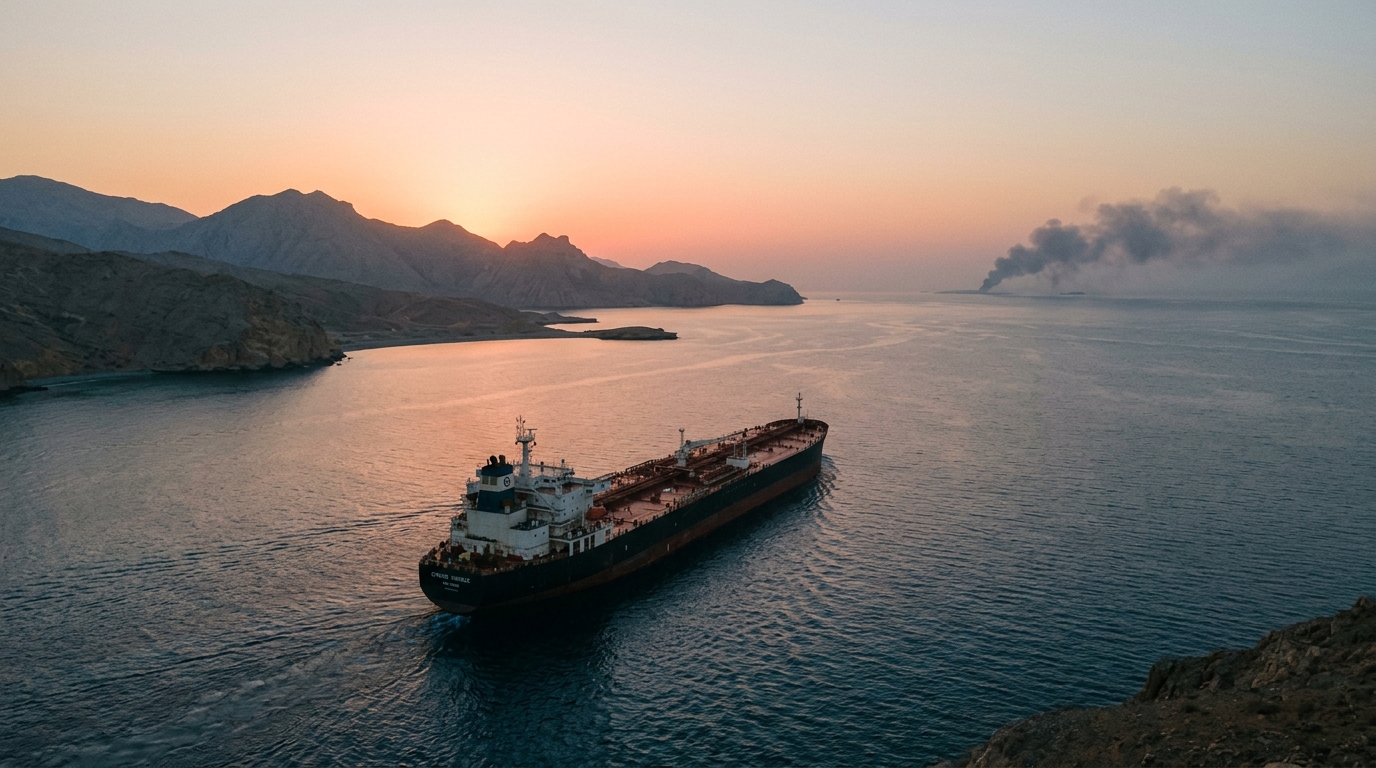
Sunday night’s CENTCOM strikes on Iranian rocket launchers near Larak Island, followed by Iran’s missile retaliation against U.S. bases in Jordan and UKMTO’s confirmation that a tanker took three projectile hits while completing an outbound Hormuz transit near Khasab, have lit a fire under crude that was already running. Brent traded around $91 per barrel on September 1, and WTI around $86.6, as markets priced renewed supply and shipping risk. Trump vowed Monday to “hit them hard.” Energy was the clear bright spot in an otherwise weak session for U.S. equities.
- Brent: around $91.05-$91.10 on September 1
- WTI: around $86.6 on September 1; Brent-WTI spread roughly $4.4-$4.6
- CVX Monday move: up roughly 3%; currently around $206
- Hormuz vessel traffic: sharply reduced versus pre-conflict norms, with recent counts around ~5 commercial ships per day
- War-risk premiums: roughly 7.5%-12.5% of hull value cited recently in market talk, versus about 0.25% pre-conflict
- CVX Q2 earnings: $12.1 billion; worldwide production up 20% year-over-year
- Analyst median target on CVX: ~$220, implying roughly 7% upside from ~$206
What a Barely-Open Strait Does to the Numbers
Before hostilities, the Strait of Hormuz was a core artery for crude seaborne trade. UNCTAD has cited roughly 38% of global seaborne crude oil trade passing through Hormuz in the week prior to the conflict, and the IEA has described Hormuz as a route for a large share of seaborne oil. Today, traffic is a fraction of normal levels, with some recent tracking showing about five commercial ships per day.
The cost structure for barrels that do transit is no longer comparable to peacetime. Additional war-risk premiums in the region have been cited around 7.5%-10% of hull value recently, with coverage available but underwriters increasingly selective and pricing volatile as attacks intensify. At those rates, a $210 million VLCC-class hull can face roughly $16 million-$21 million in incremental war-risk premium for a single transit. Those costs eat directly into realized margins for any barrel that still makes it through.
CVX vs. XOM: The Barrel-Mix Difference
This is where Chevron’s structural advantage becomes a genuine Q3 trading thesis rather than a sector-wide herd move. ExxonMobil has meaningful assets and interests in the Middle East, and it has disclosed that Middle East assets represent about 20% of its global oil-equivalent production, though a smaller percentage of Upstream earnings. In this cycle, the market’s focus is less about headline crude and more about which integrated names are most exposed to Hormuz-linked operational and shipping disruption versus those with heavier U.S.-centric barrels.
With Brent now holding above $90 after a brief late-August dip, Chevron’s Q3 realizations still face a tailwind, and the debate for traders is how much of that tailwind turns into incremental cash flow versus how much gets absorbed by higher logistics, insurance, and security costs for globally traded barrels. Chevron has highlighted record U.S. production, and its domestic-heavy growth engines are central to the relative framework as geopolitical risk rises and falls.
Technical Framework
CVX broke above its 50-day moving average on Monday’s session and held it in Tuesday pre-market trading near $206. The all-time closing high is in late March 2026, around $209, and that zone is the immediate resistance area to watch. A close through $208-$210 on above-average volume would confirm continuation. Support sits at $198, the prior consolidation base from late August.
Brent moving and holding above $90 is the macro anchor for the energy sector’s bid; a close back below $88 without a clear de-escalation catalyst would undercut the move.
Scenario Modeling
Bull Case: A second tanker is struck or CENTCOM confirms active mine-laying resumes in the main shipping lane. Brent tests $95-$100. CVX pushes toward $215-$220, approaching the analyst median target. War-risk premiums push into the low-teens as a percent of hull value, further suppressing competing barrel flows and widening any realization advantage for less Hormuz-dependent supply chains versus Gulf-exposed peers.
Base Case: Hostilities remain episodic. Brent holds $88-$93 through September. CVX consolidates between $200 and $210 as Q3 production data and realization guidance come into focus ahead of October earnings season. Relative positioning continues to favor operators with higher exposure to North American barrels and logistics optionality.
Bear Case: Oman-mediated talks produce a credible shipping-corridor agreement with verifiable compliance. Even partial normalization would unwind the risk premium sharply. Brent retreats to the $82-$85 range. CVX gives back Monday’s gains and tests the $195-$198 support level.
Active Trader Strategy Framework
The asymmetry here favors positions already held over chasing Monday’s gap higher. Traders entering CVX above $205 should define risk against the $198 level, sizing accordingly. Implied volatility on front-month CVX options is elevated; selling premium against long stock is one approach to manage cost basis if Brent oscillates. Watch Brent’s $90 level as the line of structural significance: the commodity confirmation or denial of the geopolitical thesis. OXY, with a primarily U.S.-weighted production mix, carries a similar domestic-barrel logic with less downstream complexity. HAL and VLO are second-derivative plays on activity and refining margins respectively, and both can benefit from a sustained oil bid, though with more volatile beta.
No directional call can be made without acknowledging how quickly these situations move. Preparation and defined risk levels matter far more than conviction about where Brent closes the week. The Hormuz situation has evolved rapidly since February 28, 2026; Monday’s escalation is the latest data point, not the final one.